
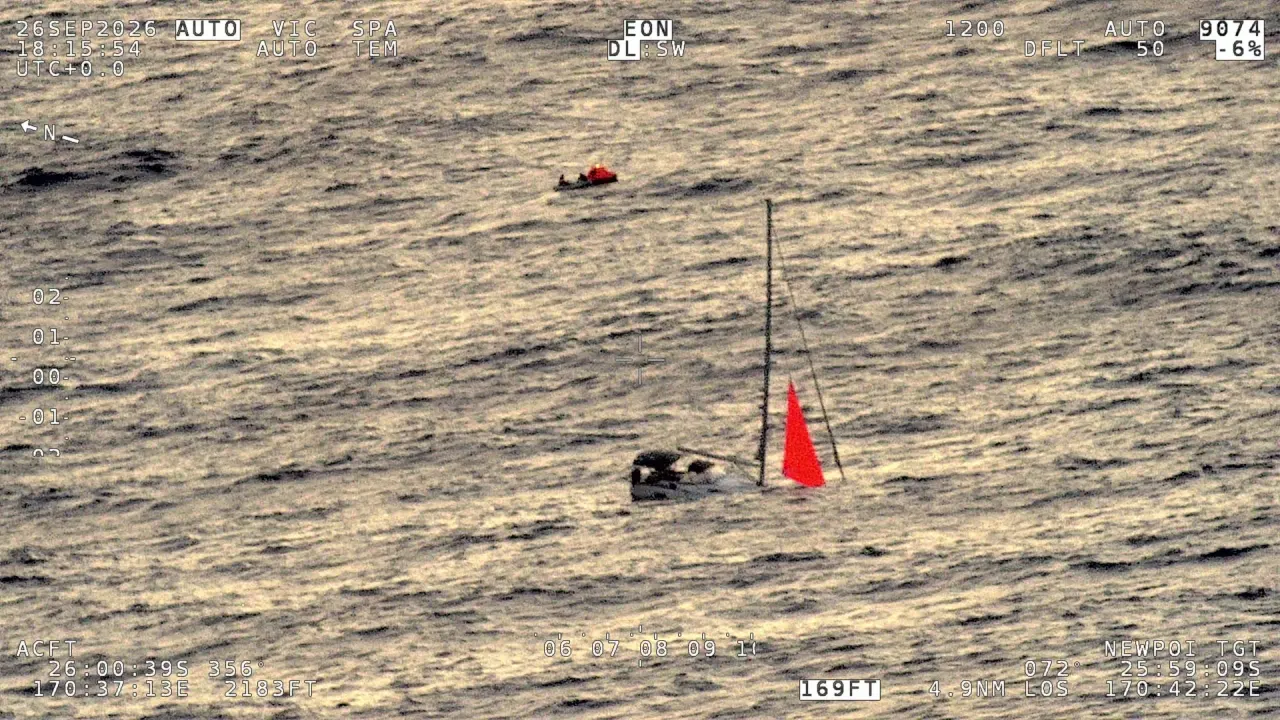
Four Sailors Rescued After 51-Foot Yacht Sinks
The Royal New Zealand Air Force and a 143-meter commercial cargo coordinated to locate and rescue four Australians in a life raft.
By Waketrace Team · · News
Four offshore sailors have been safely rescued from a life raft 250 nautical miles north of Norfolk Island after their 51-foot yacht struck a whale, suffered catastrophic water ingress, and sank in the open ocean.
The dramatic rescue operation, coordinated across thousands of miles of the South Pacific by Maritime New Zealand’s Rescue Coordination Centre (RCCNZ), involved a Royal New Zealand Air Force (RNZAF) P-8A Poseidon maritime surveillance aircraft and regional search-and-rescue centers in Australia and New Caledonia, culminating in a successful recovery by a commercial container ship.
An unexpected mid-ocean collision
The emergency began on Saturday afternoon when the Australian-flagged sailing yacht Tai Tam was transiting open waters between New Zealand, Australia, and the South Pacific islands. While sailing roughly 250 nautical miles north of Norfolk Island, the 51-foot vessel collided with a whale.
The impact caused severe structural damage below the waterline, triggering rapid water ingress that overwhelmed the yacht's bilge pumping systems. Recognizing that the vessel could not be saved, the skipper and three crew members took immediate emergency action; activating their 406 MHz Emergency Position Indicating Radio Beacon (EPIRB), gathering emergency grab bags, and abandoning ship into an inflatable life raft as the vessel went down.
At approximately 1:00 PM New Zealand time, the digital distress signal was intercepted via satellite and relayed directly to the RCCNZ headquarters in Wellington.
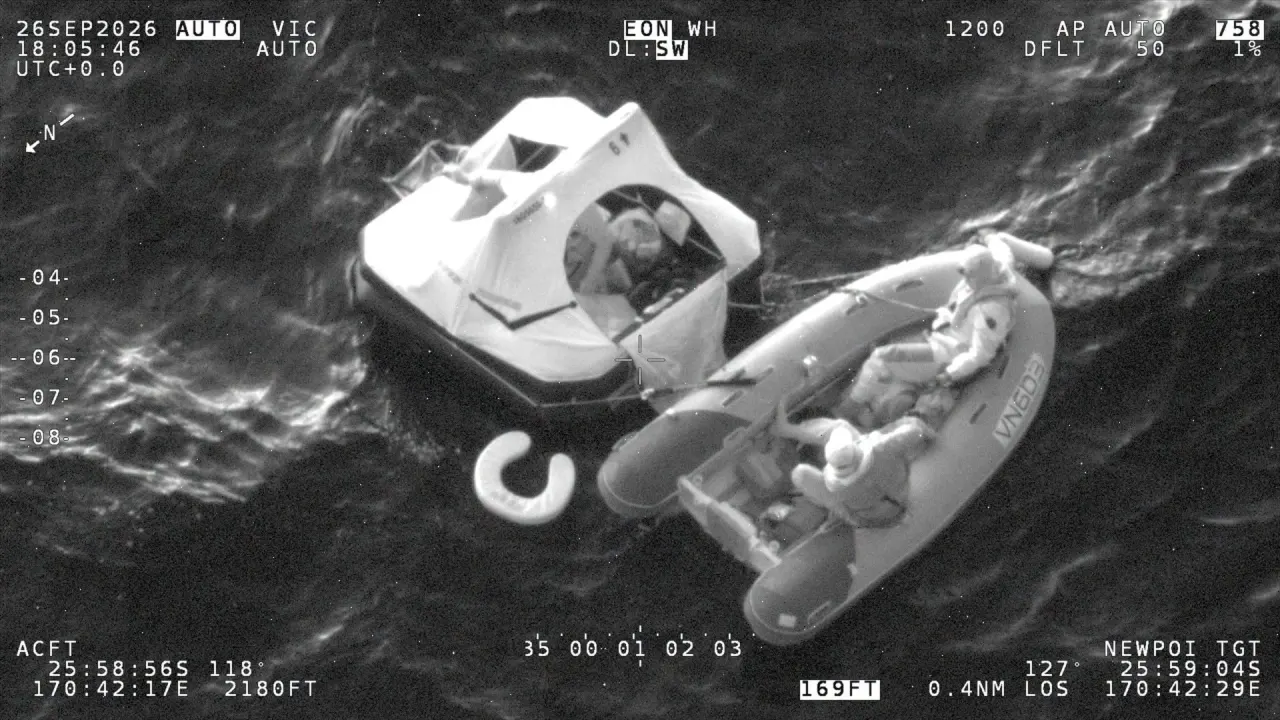
Aerial surveillance and multi-agency coordination
With the distress beacon pinpointing an emergency in a vast, remote sector of the Tasman/Coral Sea boundary, the RCCNZ immediately launched a high-priority search-and-rescue operation.
The rescue center tasked a Royal New Zealand Air Force P-8A Poseidon maritime patrol aircraft from RNZAF Base Auckland to transit to the coordinates. Simultaneously, watchstanders coordinated international support with the Joint Rescue Coordination Centre (JRCC) Australia and the Maritime Rescue Coordination Centre (MRCC) Noumea in New Caledonia.
Upon arriving on scene, the crew of the P-8A Poseidon quickly detected the life raft using onboard radar and visual sensors. The aircrew established direct, two-way VHF radio communication with the four survivors inside the raft, confirming that everyone was alive, accounted for, and uninjured. The aircraft remained overhead to maintain communications and work with incoming rescue vessels toward the life raft's drifting position.
Rescue at sea by container vessel
The sailors spent several cold hours drifting in the life raft overnight as surface vessels converged on their location.
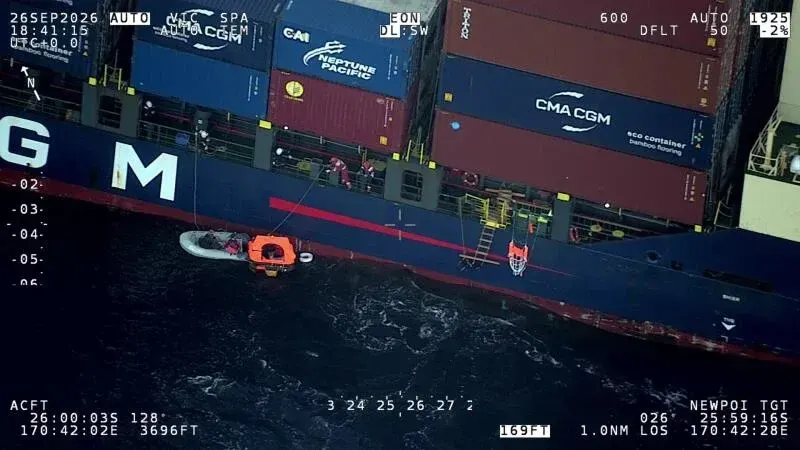
At approximately 6:00 AM on Sunday, the 143-meter commercial container vessel MV Sofrana Surville arrived first on the scene, alongside a nearby private sailing yacht that had also diverted to assist.
Executing a careful close-quarters approach in open-ocean swell, the crew of the MV Sofrana Surville secured the life raft alongside, deployed climbing nets and recovery slings, and safely winched all four sailors aboard the cargo ship.
Textbook emergency preparedness lessons
Following the recovery, RCCNZ Operations Manager Mike Clulow commended both the professional multi-agency response and the exemplary emergency discipline displayed by the yacht’s crew.
This was a well-coordinated and executed rescue, and I’d like to thank our partners at the New Zealand Defence Force for their assistance, along with the assistance of JRCC Australia and MRCC Noumea who provided support, Clulow said.
Our thanks also extend to the crew of the MV Sofrana Surville and a private sailing vessel who effected the rescue.
Clulow emphasized that the positive outcome was directly attributable to the crew’s preparation before they ever left port.
The crew of the yacht did all the right things, and it was unfortunate to have struck a whale in open water, Clulow stated.
They were well prepared and the early activation of their EPIRB was key to helping get them to safety. It is an excellent reminder that being prepared when going to sea can save your life.
Open the live Risk Event Map →