
Lagoon 42 Sinks After Safety Hatch Failure
Solo Canadian sailor James "Ted" Rutledge survived 15 hours adrift in the Indian Ocean after his retrofitted escape hatch failed.
By Morgan Blakeman · · News
In the dead of night, roughly 1,000 kilometers from the Australian mainland, an alarm system sounded aboard a French-made Lagoon 42 catamaran.
The vessel's 70-year-old skipper, Canadian James "Ted" Rutledge, glanced towards his cabin in the starboard hull. There, he saw the reflection of water. Running down the stairs into the hull, Ted discovered the floorboards were already lifting. Turning around, he saw the hull's escape hatch, a component designed as an emergency exit in the event of a capsize, was missing.
Within 10 minutes of this discovery, Ted realized his boat was going to sink.
Abandoning ship in the remote Indian Ocean
A member of the live-aboard sailing community, Ted had departed from Darwin, Australia, bound for Christmas Island, and ultimately South Africa. Halfway through a circumnavigation, he had already logged thousands of nautical miles aboard and visited 33 countries. This night, was among any sailors worst nightmares.
The flooding coming through the hatch was uncontrollable, and within six or seven minutes, Ted said the water went from ankle deep to chest height. As more water came through, the open hole dropped lower, allowing even more water inside.
Escaping the boat proved difficult. The catamaran's inflatable life raft was submerged and unusable.
Ted moved to his secondary plan; escaping in the tender. While trying to drop it, the dinghy became stuck, so he used a knife to cut it loose. During the process, his hand became clamped in part of the boat, injuring it. By pure luck, a wave forced Ted's hand free, allowing him to cast off.
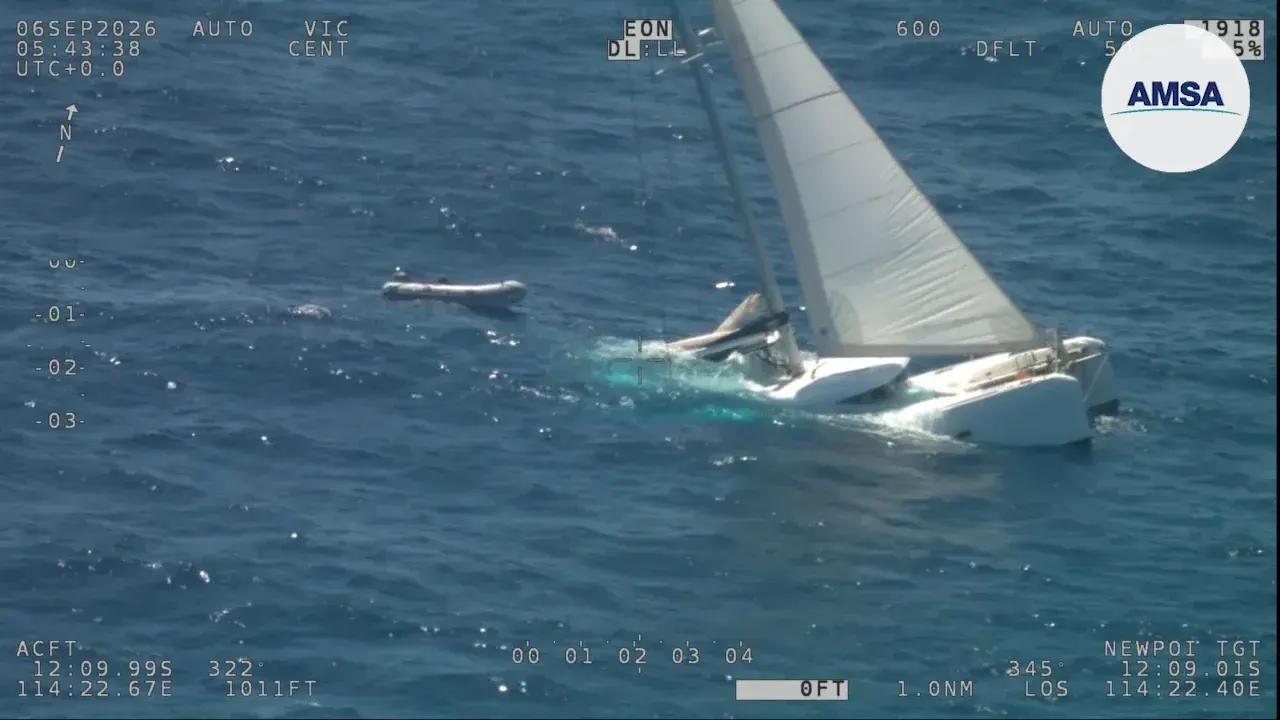
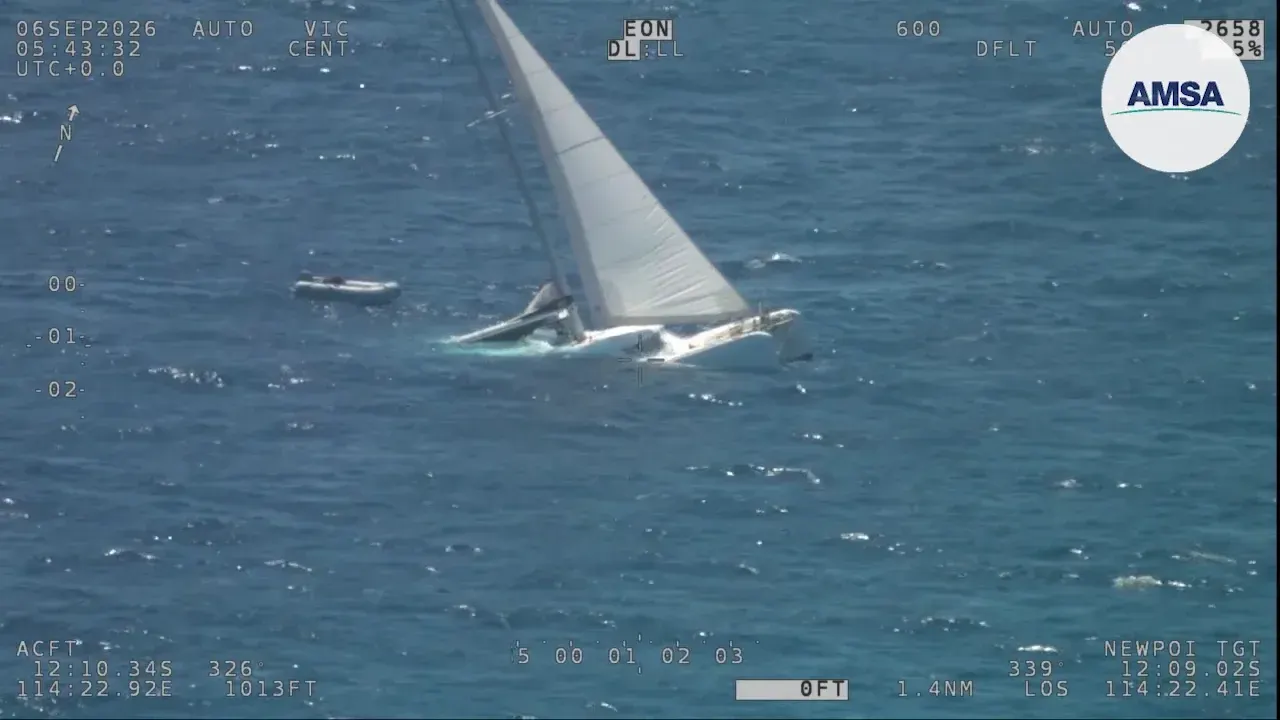
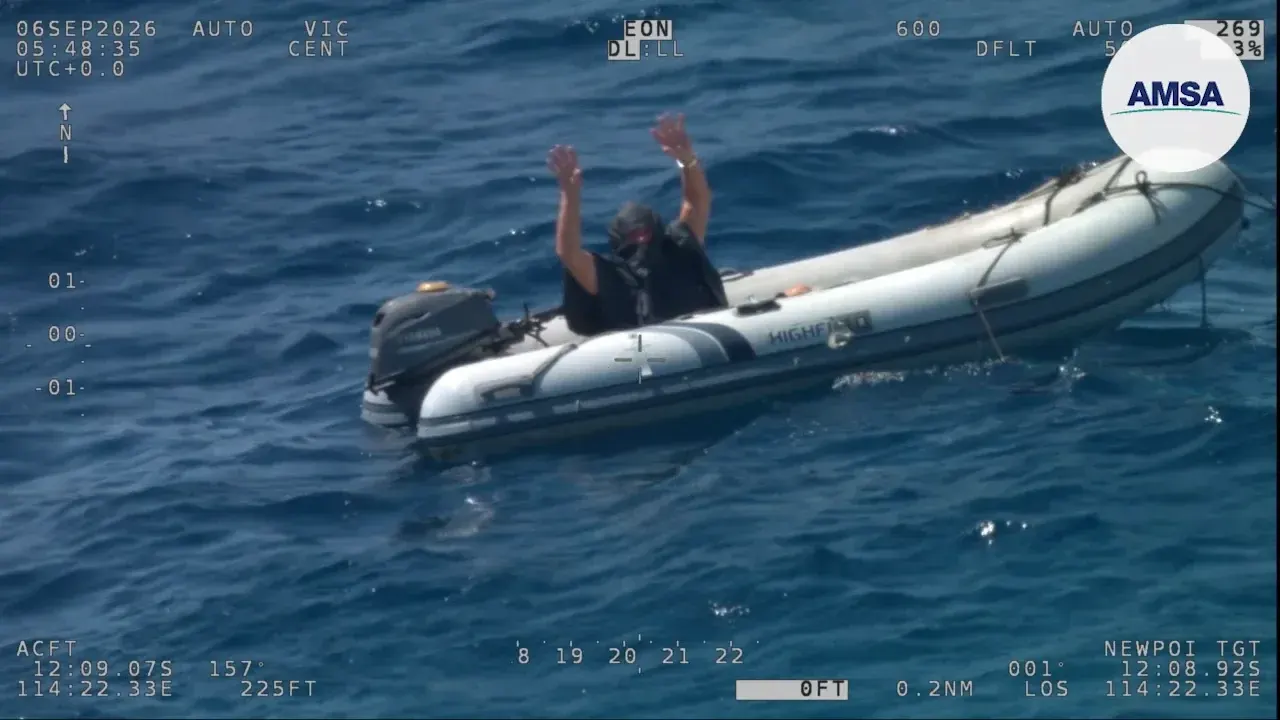
Semi-submerged catamaran settled at a 45-degree angle, mostly underwater. Covered in a poncho Ted lay in the tender, staying awake through the night. He had tied his Highfield to the highly visible wreck, but feared the catamaran would full submerge, and pull the tender down with it.
Fifteen hours adrift
Adrift, Ted was not sure when rescue would happen.
He believe his EPIRB had floated inside the sinking catamaran, meaning it wouldn't automatically activate. However, shortly before the boat began taking on water, he had messaged his position to his brother, Kelly Thomas, back in Canada. This was part of an agreed communication safety net, with Ted sending his position to certain people every 6 hours.
After failing to get in contact with Ted, a concerned friend in Ontario reached out to Thomas. Recognizing that his brother would not miss an update without reason, Thomas contacted the Australian Maritime Safety Authority (AMSA) Rescue Coordination Centre.
Coordinated rescue by air and sea
After failing to detect the yacht by radar, AMSA dispatched its dedicated search-and-rescue jet. Within a couple of hours of searching, the jet crew located the partially submerged catamaran and sighted Ted in the nearby tender.
The aircraft dropped life-saving supplies, including a life raft, an emergency beacon, communication equipment, food, and water. Establishing radio contact, the aircrew instructed Ted to remain in place and await rescue.
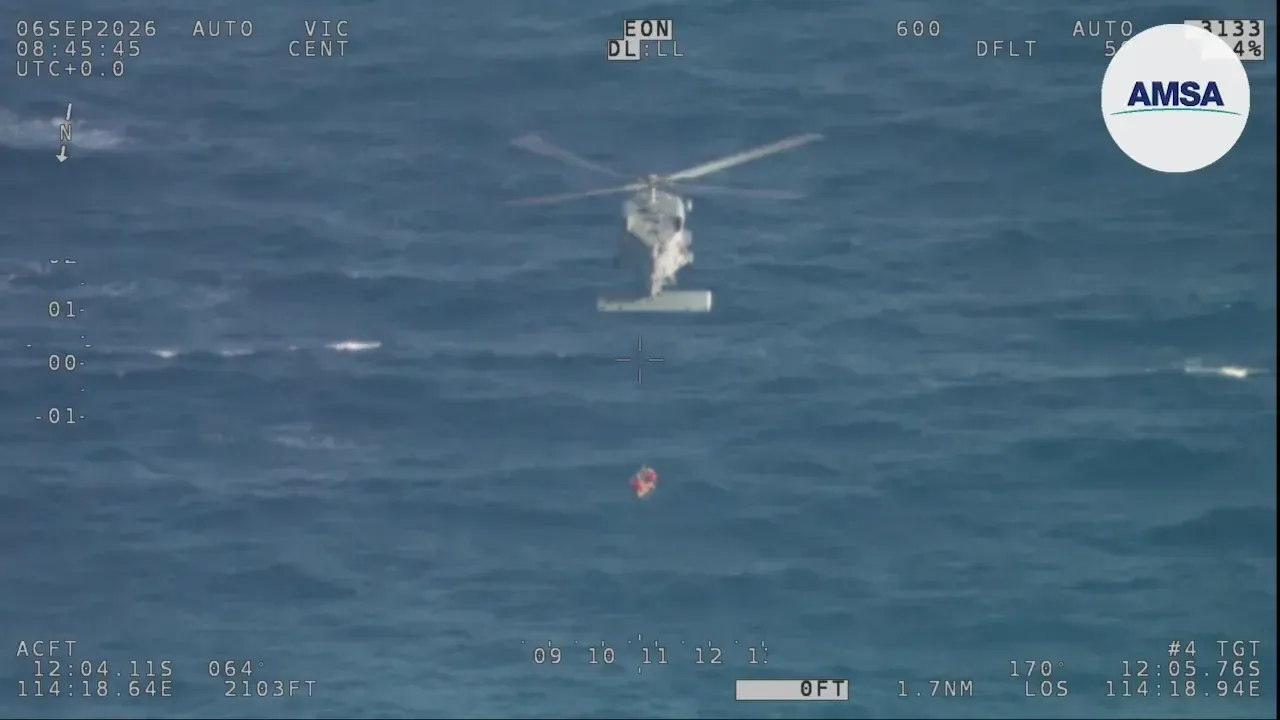
HMAS Supply, of the Royal Australian Navy, was operating approximately 70 nautical miles from the area. Commander Kylie Turnbull ordered the deployment of a MH-60R Seahawk helicopter to assist with the rescue.
The helicopter conducted a winch rescue, and brought Ted aboard HMAS Supply. By that time, he had been floating at sea for 15 hours.
GOIOT safety hatch recalls
Ted stated to ABC News that his vessel's loss was not caused by navigational error: "It wasn't something that I did wrong. I didn't misnavigate. I didn't run into a shoal or another boat. It was just that those windows weren't built well enough to stay in."
Catamaran escape hatches are installed on the inner hulls, often beneath the stairs leading to sleeping cabins. They are installed due to mandated regulatory requirements and CE safety standards as emergency exits, intended to allow crew to evacuate if a catamaran capsizes.
In 2020, French manufacturer GOIOT Systems announced a safety recall for escape hatches delivered before September 2018. The recall affected catamarans built by four major French multihull manufacturers:
- Lagoon
- Fountaine Pajot
- Catana (including Bali Catamarans)
- Nautitech
The recall was prompted by the risk that the escape ports could detach from their frames.
LAGOON CATAMARANS
Lagoon Catamarans built between 2007 and 2019 and fitted with GOIOT hatches were impacted by the recall campaign. Ted's Lagoon 42 was apparently one of these boats.
RETROFITS AND HOLDING KITS
GOIOT set up a system with boatbuilders and shipyards where securing kits or a replacement hatch were supplied to owners who reached out. For Lagoon T44 fixed hatches, the securing kit consisted of two safety brackets designed to hold the glass in position in the event of detachment. On the Cristal 49.42, it was the replacement of the lid.
Ted stated he had the affected escape hatch retrofitted in Panama to secure the Plexiglass hatch window. Despite this retrofit, the hatch detached while underway in the Indian Ocean.
"Maybe in retrospect, I should have had them fibre-glassed in, but you spend that much money on a boat and you think it's being built to the best of all possible instances," he said. "The components they used were just inferior."
THE 10-YEAR REPLACEMENT DIRECTIVE
In June 2026, Lagoon issued an updated notice on their website regarding fixed GOIOT emergency hatches.
The manufacturer emphasized that GOIOT now recommends replacing affected emergency hatches every 10 years as part of routine maintenance. The recommendation is based on the reality that materials and adhesives degrade over time when exposed to the marine environment, including UV exposure, temperature fluctuations, humidity, and seawater. Regardless of whether a holding kit is installed, any GOIOT escape panel that is 10 years old or older must be replaced.
A home at the bottom of the ocean
For Ted Rutledge, the failure of that component meant losing his vessel in 10 minutes in the middle of the Indian Ocean. His survival stands as a clear reminder of the importance of regular shore check-ins, while the loss of his catamaran highlights the ongoing need for owners to be aware of the condition of their emergency hatches.
Do you own or sail on a catamaran equipped with escape hatches? Share your experiences and maintenance practices in the comments.