
Sailors Guide to the COLREGs: The Rules of the Road at Sea
The COLREGs are the universal traffic rules of the world's oceans. Learn what they are, where they apply, and why every skipper must understand them.
By Waketrace Team · · Risk Management · Seamanship
Imagine driving down a multi-lane highway without lane markings, traffic lights, speed limits, or right-of-way laws. On the water, where vessels of vastly different sizes, speeds, and maneuverability share the same open space, navigation without universal standards would result in chaos.
To help prevent disaster on the high seas, the global maritime community operates under a standardized rulebook; the COLREGs. These rules dictate who has the right of way, how vessels must alter course, and how to signal your intentions day or night.
Understanding the COLREGs is not just good seamanship; it is the legal bedrock of safe navigation.
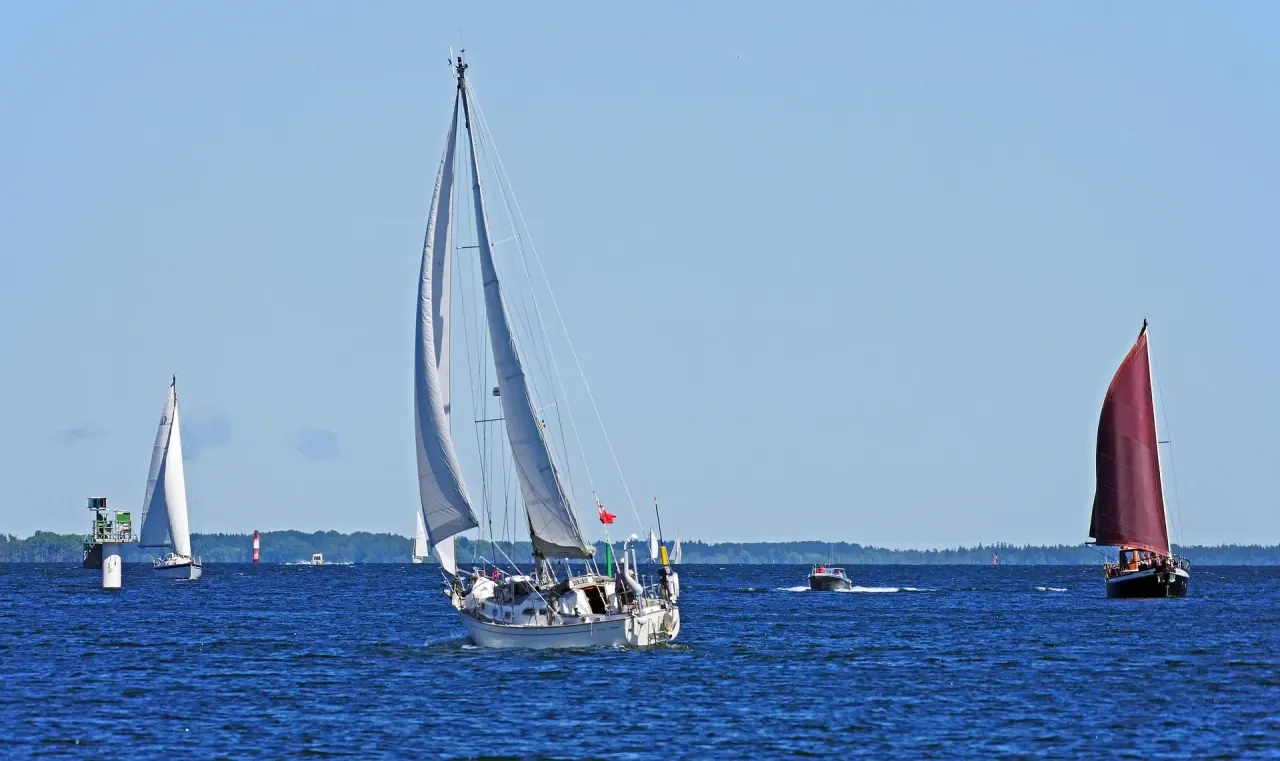
What are the COLREGs?
"COLREGs" is the universal shorthand for the Convention on the International Regulations for Preventing Collisions at Sea, 1972. Also referred to as the "Collision Regulations," they are an internationally negotiated treaty established under the International Maritime Organization (IMO), the specialized maritime agency of the United Nations.
Adopted in London in October 1972, and entering into international force in July 1977, the COLREGs replaced the older 1960 Collision Regulations. Their primary objective is simple: eliminate ambiguity at sea.
The regulations establish standardized behavioral protocols for when two vessels approach each other, explicitly defining which vessel is the give-way vessel (obligated to take early and substantial action to keep well clear) and which is the stand-on vessel (obligated to maintain its course and speed, while taking emergency action if a collision becomes imminent).
Are the COLREGs legally mandated?
Yes. The COLREGs are not polite suggestions, guidelines, or informal traditions; they carry the full force of domestic and international law.
When sovereign nations ratify the IMO convention, they pass domestic legislation incorporating the COLREGs directly into their national legal codes. For example:
- In the United States, the international rules are codified under 33 U.S.C. §§ 1601–1608
- In the United Kingdom, they are enforced through the Merchant Shipping (Distress Signals and Prevention of Collisions) Regulations.
- In Australia, they are enacted under the Navigation Act and managed by the Australian Maritime Safety Authority (AMSA).
Who must comply?
Under Rule 1, the COLREGs apply to all vessels upon the high seas and in all waters connected therewith navigable by seagoing vessels. The legal definition of a "vessel" under Rule 3 is intentionally broad: it includes every description of watercraft used or capable of being used as a means of transportation on water, including non-displacement craft, Wing-in-Ground (WIG) craft, and seaplanes.
This means a commercial fisherman in an open dory, a cruising sailor in an anchorage, and a watch officer on a nuclear-powered aircraft carrier are bound by the exact same legal obligations.
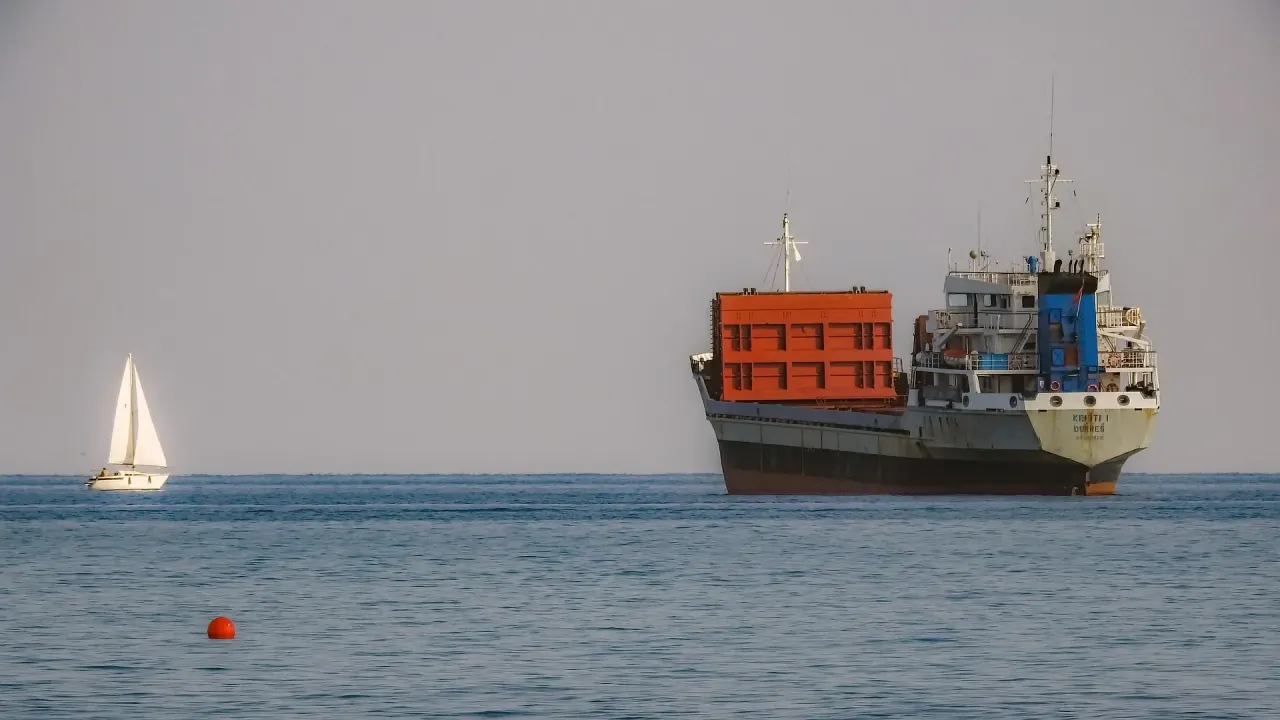
What the COLREGs cover
The COLREGs are organized into 41 rules, divided across six main parts (Parts A through F), supplemented by four technical annexes:
| Section | Rules | Core Function |
|---|---|---|
| Part A: General | Rules 1–3 | Jurisdiction, definitions, and vessel classifications |
| Part B: Steering & Sailing | Rules 4–19 | Traffic rules: look-out, safe speed, right-of-way, and fog conduct |
| Part C: Lights & Shapes | Rules 20–31 | Running lights and day shapes indicating vessel status |
| Part D: Sound & Light Signals | Rules 32–37 | Horn blasts for maneuvering, fog, and danger warnings |
| Parts E & F: Admin | Rules 38–41 | Vessel exemptions and IMO member-state audit schemes |
| Annexes I–IV | — | Technical specs for hardware, light arcs, and distress signals |
How the COLREGs can be accessed
Because the COLREGs are international public law, they are freely and widely available across numerous formats. One source is the United Nations Digital Library.
Are the COLREGs updated?
While the core philosophy of the 1972 convention has proven remarkably durable, the COLREGs are living regulations that the IMO updates periodically to address evolving marine technology, changing traffic densities, and newly emerging maritime industries.
Amendments are proposed and drafted by the IMO’s Maritime Safety Committee (MSC) and adopted through a tacit acceptance procedure across member states. Key updates over the decades have included:
- Major amendments in the 1980s and 1990s refined Rule 10, restricting inshore traffic zones and clarifying how vessels must enter, cross, and exit commercial shipping lanes.
- Revisions to Annexes I and III updated the photometric tables for modern LED navigation lights and specified acoustic decibel ranges for sound-signaling equipment.
- Incorporating specific operating provisions for Wing-in-Ground (WIG) craft and high-speed catamarans.
The next frontier: Autonomous ships
The most significant upcoming overhaul to the COLREGs centers on Maritime Autonomous Surface Ships (MASS). The IMO is currently developing a mandatory goal-based MASS Code to establish how unmanned or remotely operated cargo vessels interact with human-crewed boats.
Share your navigation and rule-of-the-road questions
Mastering the COLREGs is an ongoing journey for every mariner. Have you ever encountered a confusing crossing situation, an unlit vessel, or a stand-on vessel that refused to hold its course?
Share your questions, close-call experiences, and seamanship tips in the comments for others to answer and learn from.
Open the live Risk Event Map →