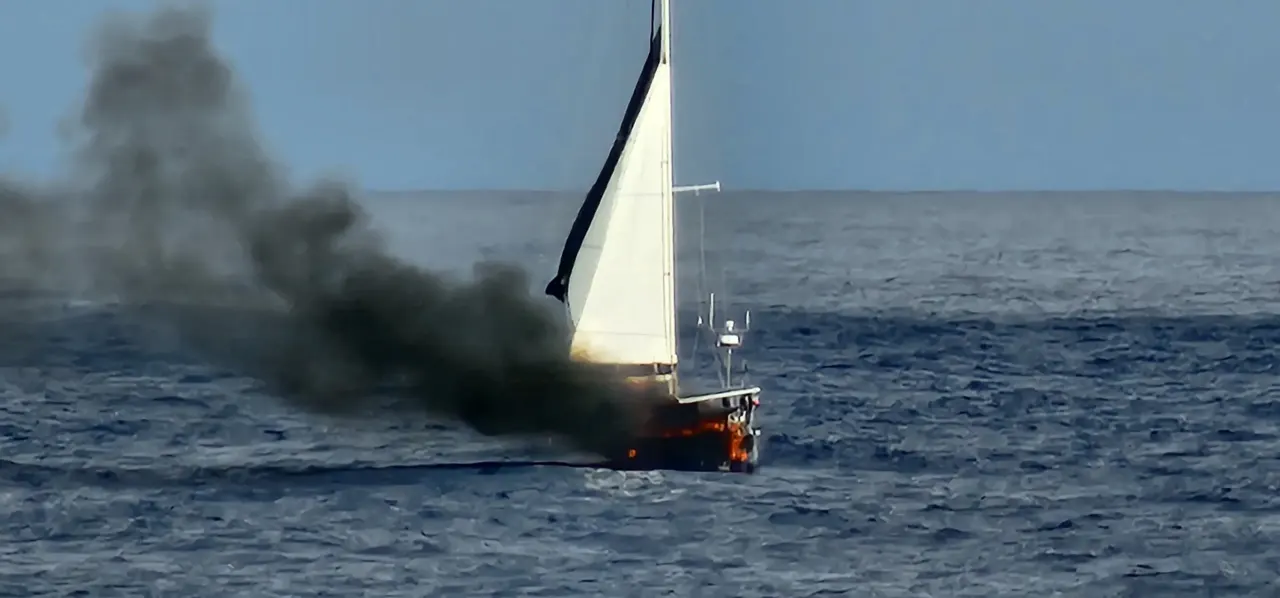
Managing Fires Aboard: Prevention and Response
Discover why boat fires escalate so quickly, the risk factors to be aware of, and how to protect your boat and crew if a fire were to start.
By WAKETRACE Team · · Risk Management
A fire aboard is a uniquely terrifying situation.
Most recreational craft, like sailboats and sports-fishers, are made of highly flammable materials. Once a fire starts, your options for containment are limited, and out at sea or anchored in a secluded bay there's no fire truck rushing down the street to save you
Sadly, boat fires happen far more often than many people realize. Worse still, a catastrophic blaze can destroy your boat even when you've done everything right, simply because an adjacent boat caught fire, or you were hit by lightning. Understanding the root causes of marine fires, how to mitigate the risks, and what to look for in insurance coverage are all essential steps in protecting yourself, your crew and your boat.
**
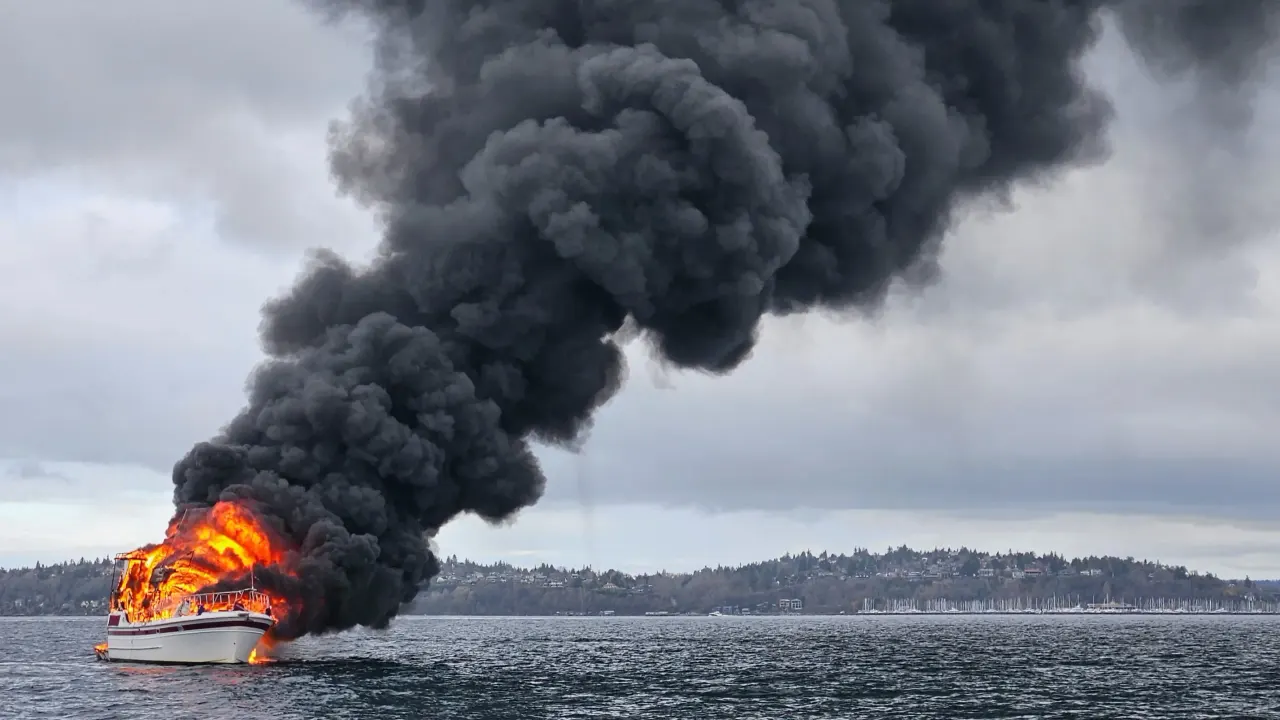
Why boat fires start and spread so quickly
Modern recreational boats tend to be filled with complex systems, powered by petrol, diesel, solar chargers, batteries and cooking gas. These systems are often surrounded by a shell of fiberglass, insulation, foam core, and interior woodwork, all of which are flammable.
Around a boat there are several ways a fire can start. This includes:
- Damaged, overloaded or incorrectly installed electrical components
- Short circuits
- Corroded battery terminals
- Cooking fires
- Lightning strikes
- Engine bay or fuel fires
- Lithium batteries in consumer devices, like e-scooters or power tools
- Outside sources, like a nearby boat catching fire
Sometimes one component fails, like a fan, and the cascading side effects lead to ignition.
REAL WORLD INCIDENTS: GENERATOR FIRE
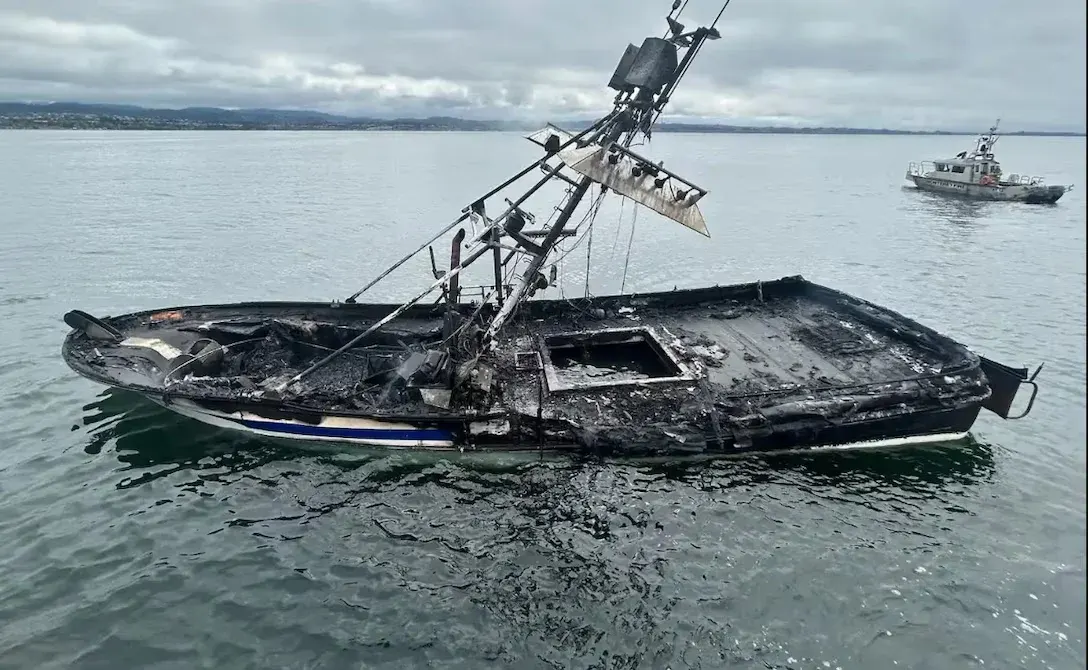
The 48-foot commercial fishing vessel The Navigator caught fire and sank off the coast of Santa Cruz, California after a generator failure ignited surrounding machinery insulation. The two-man crew woke to heavy smoke before they emptied multiple fire extinguishers and dumped buckets of water down the exhaust stacks in an attempt to reach the compartment. Despite their efforts, the flames quickly grew unmanageable in the enclosed space, forcing both crew members to abandon ship.
REAL WORLD INCIDENT: ACETONE DESTROYS NEW YACHT
A tragic blaze aboard a Leopard 50 catamaran berthed at a marina illustrates how quickly volatile fumes and uncoordinated maintenance can destroy a vessel.
While one authorized contractor cleaned with acetone in the stern, an electrician worked independently in the bow. Dense acetone vapors settled into the bilges, traveled the length of the hull, and ignited on an electrical spark, causing an explosive flashback that incinerated the solvent can. Both workers were severely burned, and the fire spread to another catamaran moored nearby, resulting in the total loss of both boats.
Practical fire prevention tips for boat owners
Preventing an onboard fire relies heavily on proactive measures. Developing a set of disciplined maintenance routines and safety processes can help you actively manage the risk of a fire aboard.
Maintain and monitor the electrical system
Inspect your wiring and batteries regularly, looking for signs of heat discoloration, melting, fraying, cable strain and corrosion. You can also use a thermal camera to check for hot joins.
When you're installing new parts, opt for brands that have a good reputation for quality, and consult or hire an expert if you aren't sure of what to do.
Be attentive when charging lithium batteries
LiFePO4 battery banks are relatively stable, but the lithium batteries in consumer devices have been responsible for catastrophic fires on land and sea. Never charge tool batteries, drones, e-scooters or other lithium batteries unattended. Be mindful of where and how you store them, avoid exposure to water, and if you see any signs of damage or distortion, replace them.
Shut the gas off
While an increasing number of live-aboard cruisers are moving towards electric cooking, the majority of boaters still rely on cooking gas. When using gas aboard, switch it off in between uses, and make sure you have functioning gas alarms installed.
As part of your regular maintenance schedule, you should also test that the system isn't leaking. To do this, pressurize the lines, close the tank valve, and verify that the pressure gauge needle doesn’t drop over time.
Inspect the fuel lines
When doing your routine engine maintenance, check the fuel return lines, filter seals, and cooling hoses to make sure everything is in place. Ensure flexible fuel lines have plenty of clearance from hot exhaust manifolds, and are double-clamped with marine-grade stainless steel hose clamps.
This is also a good time to check on your generator, if you have one aboard.
Equipping onboard fire suppression tools
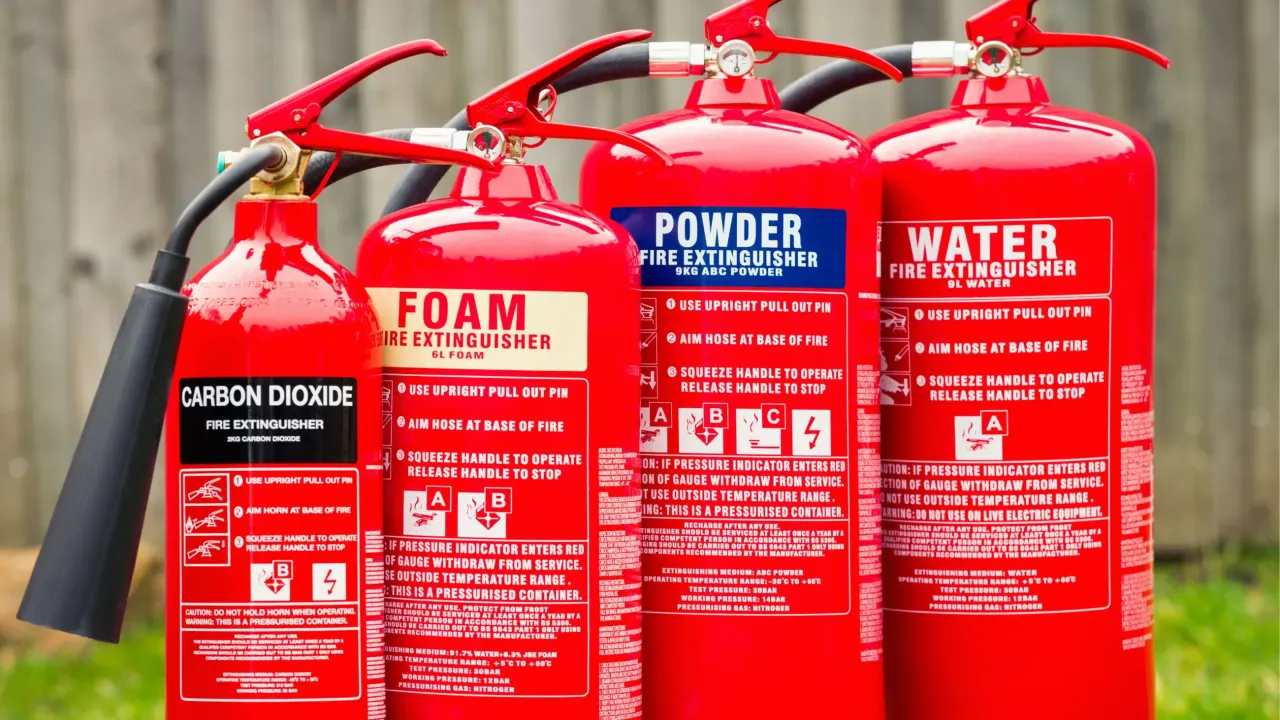
Being able to successfully suppress a fire on a boat is very difficult, and requires matching the proper extinguishing agent to the specific type of fire. Traditional dry chemical fire extinguishers are standard equipment, but they are not the best choice for all fire types. It's a good idea to have a lithium fire extinguisher aboard as well.
Have fire alarms and appropriate extinguishers placed in key areas of the boat, such as the galley, engine bays, cabins and where their electrical system is installed. Make sure extinguishers are charged and accessible, and that the alarms have batteries.
Depending on the types of engines you have installed, and the size of the boat, it may also be worth installing an automatic engine room suppression system. These systems utilize heat-sensitive actuators to flood the compartment with a gas that smothers the fire without damaging the engine or wiring.
Abandon ship
Due to the ferocity of the flames, the best course of action in a boat fire is often to launch the tender, and abandon ship. As a crew, it's important to discuss in advance what the protocol is, should a fire start.
- Have escape plans for every cabin, making sure overhead deck hatches can be opened from the inside, and ensuring that sunshades and covers can be pulled free instantly in total darkness
- If there are pets, young children or elderly people aboard, ensure the plan addresses their capabilities
- Make sure the tender (or life-raft) can be launched quickly in an emergency
- Ensure emergency tools and communication devices are stored in easy to reach places
- Discuss who and how you would call for help, updating this as you change locations
What to look for in a marine insurance policy
If your boat burns down, having a comprehensive marine hull and liability insurance policy may be your only financial shield. When evaluating a yacht policy for fire and proximity risks, here are a few things to look for:
- Having an Agreed Value policy, rather than Actual Cash Value policy, can help guarantee you will receive the stated dollar figure on your policy, avoiding contentious depreciation battles with claims adjusters over the age of your hull and electronics
- If your boat sinks or catches fire, you are generally legally responsible for wreck removal and fuel cleanup costs. Ensure your policy includes separate, high-limit coverage for marine pollution and wreck containment, that ideally does not deduct from your hull payout.
- See if there are any general exclusions or conditions related to fire in the fine print, including if the fire were to start as a result of lightning or a manufacturing defect.
- Review your third-party property damage liability limits. If an electrical fire starts on your boat and spreads to two neighboring superyachts, the liability limit could be exhausted quite quickly.
- Check the policy's fine print for fire equipment requirements, including inspections, servicing and age. Failing to meet these requirements could give the insurer grounds to contest a fire claim.
Share your fire safety setups and lessons
Protecting your vessel from fire requires constant vigilance, thoughtful maintenance routine, and the foresight to carry insurance that protects your investment when disaster strikes.
Share your fire related experiences, safety routines, gear recommendations, and lessons learned in the comments, to help others learn from what you know.